





Enter your VAT number here and click Verify:
Your details have been verified. VAT number registered to:
,
.
Your order will now be zero rated for VAT purposes. We reserve the right to verify these details after your order request has been made and reinstate VAT if required.
Your VAT details were not recognised or were invalid. Your VAT number must be matched to your Billing Country as specified above. This is currently specified as . You do not need to enter the country code part of your VAT number as this has already been selected in your billing address details above.
The VAT number checking service is currently offline. Please supply your VAT details within the comments or special instructions field below and we will apply a VAT discount after placing your order request.

- Accessories
- Brakes
- Chassis / Bodywork
- Clothing & Gifts
- Electrical & Relays
- Engine Cooling
- Engine Electrical
- Engine Rebuild Parts
- Engine Tuning
- Exhausts
- Exterior Styling / Spoilers
- Gearbox / Transmission
- Hydraulics
- Incar / Multimedia
- Interior & Accessories
- Lighting
- Mats & Carpets
- Motorsport and Off-Road
- Parts for Other Cars
- Pedal Cluster
- Rubber Seals
- Seats & Seat Belts
- Service Parts
- Special Offer Parts
- Suspension & Axle
- Suspension Upgrades
- Tyres
- Wheel Accessories
- Wheels
 Porsche

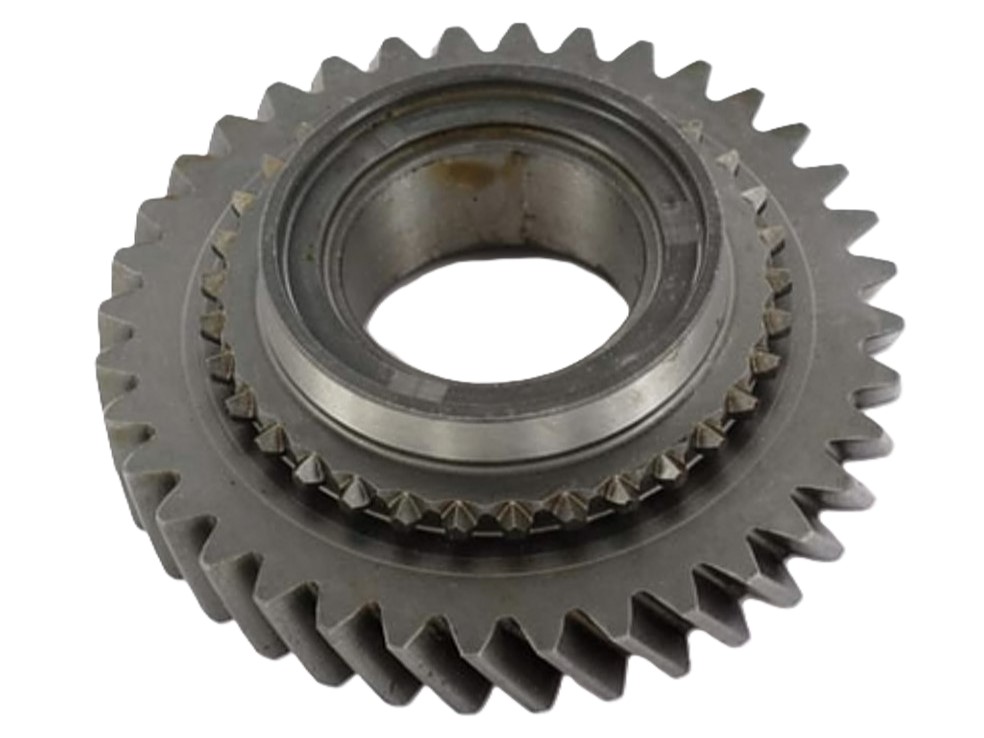
The Genuine Porsche 1st Gear Shifting Gear is an internal manual transmission component used in selected Porsche 924, 924 S and 944 5-speed gearboxes.
Fits:
- Porsche 924 2.0L 1980-85
- Porsche 924S 2.5L 1986-87
- Porsche 924S 2.5L 1988
- Porsche 944 2.5L 8V 1982-87
- Porsche 944S 2.5L 16V 1987-88
- Porsche 944 Turbo 2.5L 8V 1985-88
- Porsche 944 Turbo 2.5L 8V 1989-91
- Porsche 944 Turbo S 2.5L 8V 1988
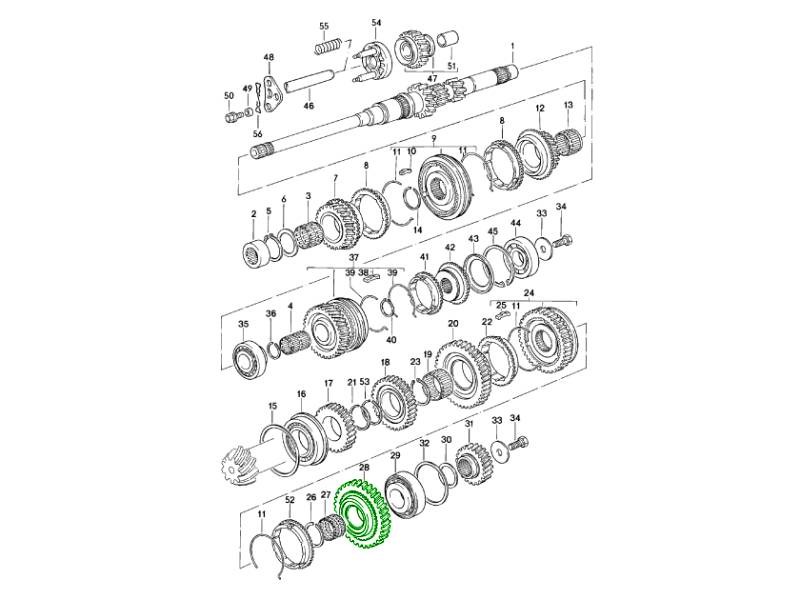
Diagram Ref No 28
Located within the transmission gearset, this component provides the gearing required for first gear. First gear delivers the highest torque multiplication in the normal forward gear range, allowing the vehicle to move away from a standstill and accelerate effectively at low road speeds.
The gear works together with the 1st/2nd synchroniser assembly, needle-roller bearing and associated transmission components. During selection of first gear, the synchroniser system matches rotational speeds before locking the gear into the driveline so engine torque can be transmitted through the gearbox.
Because first gear regularly handles high torque during vehicle pull-away, worn gear teeth, engagement teeth or associated synchroniser components can eventually lead to noise, difficult gear selection, jumping out of gear or loss of reliable drive.
What This Product Does:
The 1st gear shifting gear forms part of the transmission's internal gear train.
It is designed to:
- Provide the transmission ratio required for first gear.
- Transfer engine torque through the gearbox when first gear is engaged.
- Provide strong torque multiplication when moving away from a standstill.
- Work with the 1st/2nd synchroniser assembly.
- Rotate on its corresponding bearing when not locked to the shaft.
- Engage with the transmission synchroniser system during gear selection.
- Support smooth transition into first gear when associated components are serviceable.
- Provide reliable low-speed drive.
- Replace a worn, chipped or damaged original first gear.
- Restore correct gearbox operation during transmission rebuilding.
Symptoms Of Wear Or Failure:
Possible symptoms include:
- Grinding when selecting first gear.
- Crunching during engagement.
- First gear becoming difficult to select.
- Gear lever resisting movement into first.
- Transmission jumping out of first gear.
- First gear disengaging under acceleration.
- Excessive gear whine in first gear.
- Rumbling or abnormal mechanical noise when first gear is engaged.
- Clicking or knocking from the transmission.
- Vibration under load in first gear.
- Poor or inconsistent engagement.
- Vehicle temporarily losing drive in first gear.
- Metal particles appearing in transmission oil.
- Chipped or damaged gear teeth discovered during gearbox dismantling.
- Worn engagement teeth.
- Excessive play between the gear and its bearing.
- Visible scoring, pitting or surface damage.
Many of these symptoms can also be caused by synchroniser wear, selector adjustment, bearings or internal transmission alignment, so diagnosis should consider the complete gearbox assembly.
Why Replacement Matters:
Transmission gears must transmit substantial torque while maintaining accurate tooth contact.
If first gear becomes badly worn or damaged, loads may no longer be distributed correctly across the gear teeth.
Replacing a damaged gear helps restore:
- Reliable first-gear engagement.
- Correct transmission of engine torque.
- Smooth low-speed operation.
- Consistent gearbox performance.
- Reduced abnormal transmission noise.
- Correct interaction with the synchroniser system.
- Long-term gearbox reliability.
Ignoring damaged gear components can allow metal debris and abnormal loading to affect other internal parts.
Related reference numbers
Related, superseded, cross reference or alternative numbers for comparison.
016311257
The product you are viewing cross references to these numbers
- Porsche 924 2.0L 1980-85
- Porsche 924S 2.5L 1986-87
- Porsche 924S 2.5L 1988
- Porsche 944 2.5L 8V 1982-87
- Porsche 944S 2.5L 16V 1987-88
- Porsche 944 Turbo 2.5L 8V 1985-88
- Porsche 944 Turbo 2.5L 8V 1989-91
- Porsche 944 Turbo S 2.5L 8V 1988
 Shop Securely
 12 Month Warranty
 Worldwide Delivery
 Express Delivery
 Free delivery


Monday-Friday: 8.30am - 5.30pm (GMT)
Saturday: Closed
Sunday: Closed