





Enter your VAT number here and click Verify:
Your details have been verified. VAT number registered to:
,
.
Your order will now be zero rated for VAT purposes. We reserve the right to verify these details after your order request has been made and reinstate VAT if required.
Your VAT details were not recognised or were invalid. Your VAT number must be matched to your Billing Country as specified above. This is currently specified as . You do not need to enter the country code part of your VAT number as this has already been selected in your billing address details above.
The VAT number checking service is currently offline. Please supply your VAT details within the comments or special instructions field below and we will apply a VAT discount after placing your order request.

- Accessories
- Brakes
- Chassis / Bodywork
- Clothing & Gifts
- Electrical & Relays
- Engine Cooling
- Engine Electrical
- Engine Rebuild Parts
- Engine Tuning
- Exhausts
- Exterior Styling / Spoilers
- Gearbox / Transmission
- Heating / Air Conditioning
- Hydraulics
- Incar / Multimedia
- Interior & Accessories
- Lighting
- Mats & Carpets
- Motorsport and Off-Road
- Parts for Other Cars
- Pedal Cluster
- Rubber Seals
- Seats & Seat Belts
- Service Parts
- Special Offer Parts
- Steering Parts
- Suspension & Axle
- Suspension Upgrades
- Tyres
- Wheel Accessories
- Wheels
.jpg "Crankshaft Standard (STD). Porsche 911 3.2 Carrera / 911 turbo / 964 turbo 3.3ltr - 93010201409, 930102014CX - 930 102 014")
 OE Match
Crankshaft Standard (STD)
This standard size crankshaft (STD) is a
precision-engineered rotating assembly component used in several iconic Porsche
air-cooled engines.
Fits:
- Porsche 911 1984-1986 3.2L
- Porsche 911 1987-1989 3.2L G50
- Porsche 911 1984 -1989 3.3L Turbo (930)
- Porsche 964 (911) TURBO 3.3L 1991-93
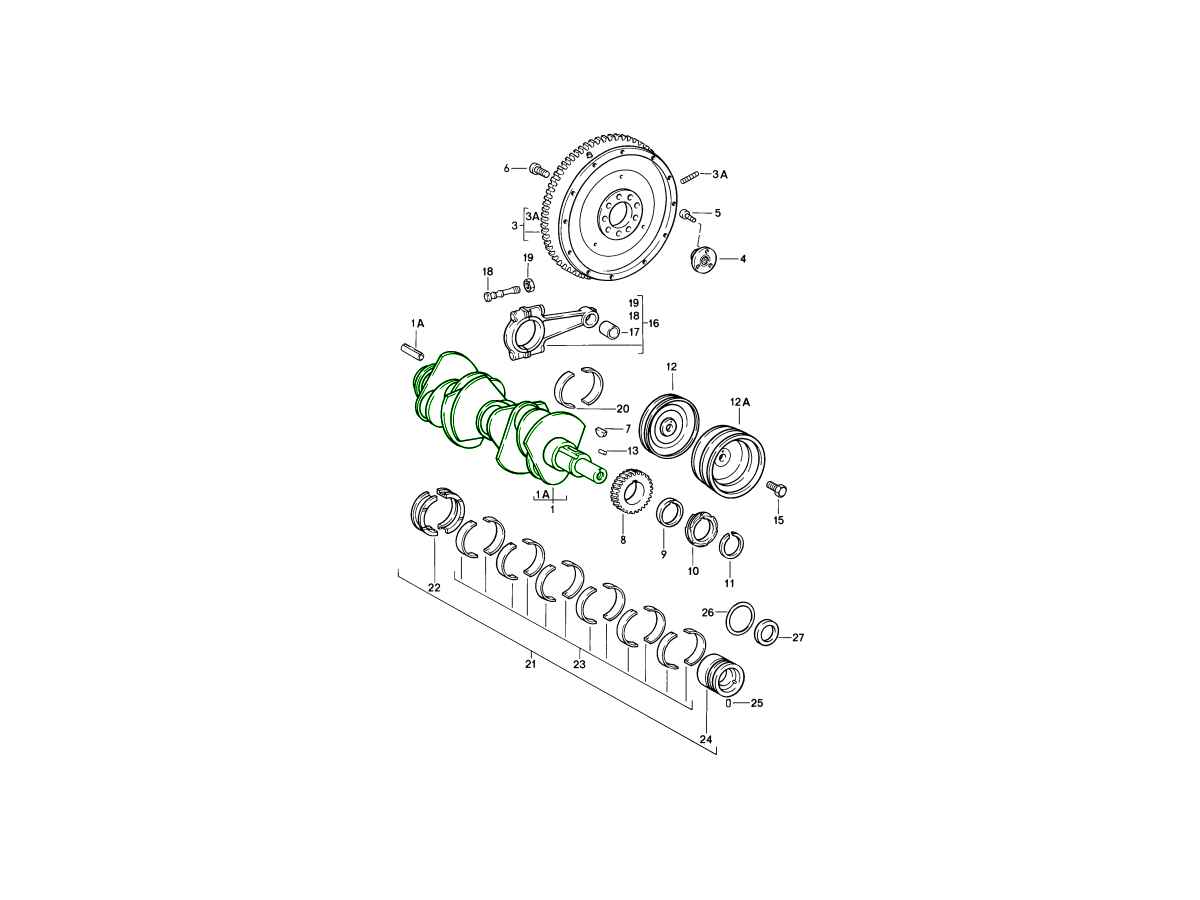
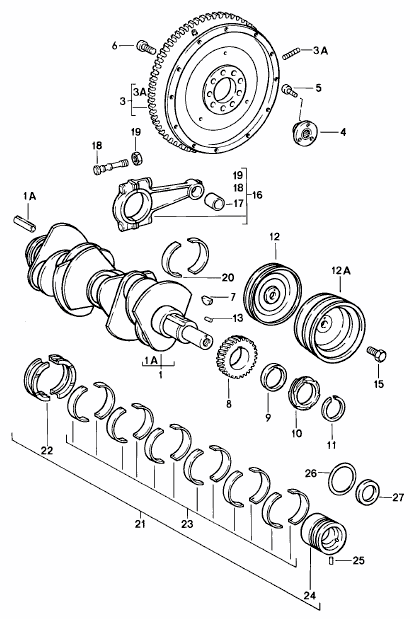
Diagram ref no 1
Designed to maintain original journal dimensions and deliver exceptional strength, this crankshaft plays a crucial role in preserving the smoothness, reliability and performance expected from these high-value flat-six engines.
Whether performing a classic restoration, a bottom-end refresh or a full performance rebuild, this crankshaft is essential for ensuring correct bearing clearances, optimal lubrication and long-term engine integrity.
What the Engine Crankshaft Does
This crankshaft is responsible for key engine functions,
including:
- Converting
piston motion into rotational torque that drives the transmission
- Maintaining
accurate journal diameters to support proper bearing lubrication
- Providing
smooth, balanced rotation across the engine’s entire RPM range
- Distributing
oil internally through precision-machined lubrication galleries
- Supporting
turbocharged loads with a strong, durable crank web and journal design
- Forming the foundation of the bottom-end rotating assembly
A correct standard-size crankshaft is vital to the long-term reliability and performance of any air-cooled Porsche flat-six.
Why Crankshafts Can Fail
Even though Porsche engineered these crankshafts for
durability, decades of use and performance driving can lead to wear or damage.
Common causes of failure include:
- Oil
starvation resulting in journal scoring or bearing failure
- Metal
fatigue from high RPM use, boost pressure or detonation
- Contamination
in the oil supply causing abrasive wear
- Overheating
weakening the crankshaft’s molecular structure
- Incorrect
machining from past rebuilds creating imbalance or mismatched
tolerances
- Severe
knock events bending or cracking the crankshaft
- High-mileage wear reducing journal roundness and bearing clearances
Symptoms of crankshaft-related failure include low oil pressure, metallic knocking, vibration, bearing debris in oil, and uneven rotation during teardown.
Why You Should Replace a Damaged or Worn Crankshaft
Installing a new or precision-built standard size crankshaft—designed to match original Porsche performance tolerances—ensures a strong, balanced and reliable engine rebuild.
Key benefits include:
- Restored bearing clearances and stable oil pressure
- Smooth, balanced engine rotation at all RPM ranges
- Reduced vibration and improved power delivery
- Enhanced reliability under turbocharged loads
- Prevention of severe bottom-end failures
- Increased lifespan of pistons, rods and bearings
- Assurance of correct geometry for high-performance use
For high-value Porsche models like the 911 Carrera 3.2 and Turbo variants, a correct, high-quality STD crankshaft is one of the most critical investments in any rebuild.
Related reference numbers
Related, superseded, cross reference or alternative numbers for comparison.
93010201409
The product you are viewing cross references to these numbers
- Porsche 911 1984-1986 3.2L
- Porsche 911 1987-1989 3.2L G50
- Porsche 911 1978-1989 3.3L Turbo (930)
- Porsche 964 (911) TURBO 3.3L 1991-93
 Shop Securely
 12 Month Warranty
 Worldwide Delivery
 Free delivery
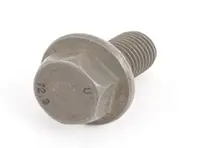



Fits:
Porsche 911 1965-89
Porsche 914 1970-76
Porsche 964 Turbo 3.3L 1991-92
Click 'Zoom in' for large parts diagram
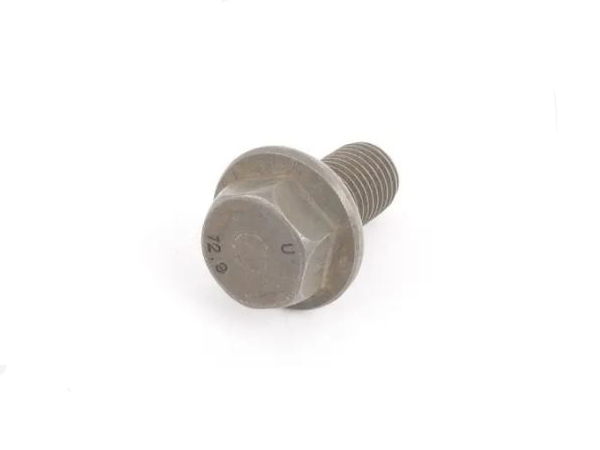
Diagram ref no 15
Related reference numbers
Related, superseded, cross reference or alternative numbers for comparison.
99909300502
The product you are viewing cross references to these numbers
- Porsche 911 1965-1968 2.0L / 912 SWB (F)
- Porsche 911 1968-1973 2.2L / 2.4L / 2.7L RS LWB (F)
- Porsche 911 1974-1977 2.7L / 1976-77 3.0 Carrera
- Porsche 911 1978-1983 3.0L / SC
- Porsche 911 1984-1986 3.2L
- Porsche 911 1987-1989 3.2L G50
- Porsche 911 1975-1977 3.0L Turbo (930)
- Porsche 911 1978-1989 3.3L Turbo (930)
- Porsche 964 (911) TURBO 3.3L 1991-93
- Porsche 914 (1970-1976)
Shop Securely
12 Month Warranty
Worldwide Delivery
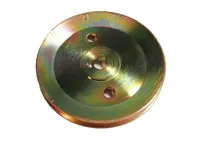

Fits:
Porsche 911 08/1968-75 (not Sportomatic)
Porsche 914 1970-76
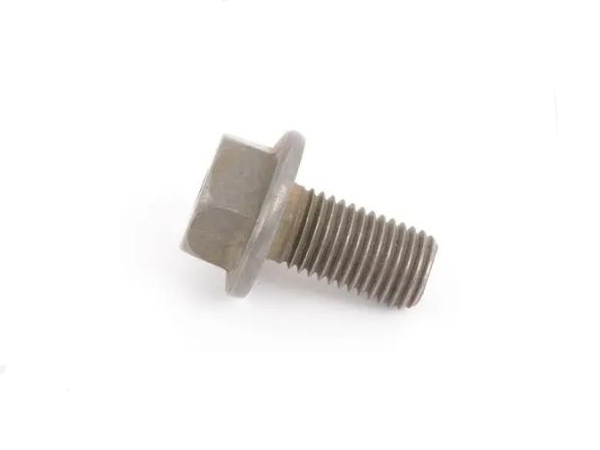
Diagram ref no 15
Related reference numbers
Related, superseded, cross reference or alternative numbers for comparison.
91110201750
The product you are viewing cross references to these numbers
- Porsche 911 1968-1973 2.2L / 2.4L / 2.7L RS LWB (F)
- Porsche 911 1974-1977 2.7L / 1976-77 3.0 Carrera
- Porsche 911 1978-1983 3.0L / SC
- Porsche 911 1975-1977 3.0L Turbo (930)
- Porsche 914 (1970-1976)
Shop Securely
12 Month Warranty
Worldwide Delivery
 Express Delivery
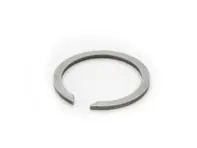



Size: 2.4mm
Fits:
Porsche 356
Porsche 911
Porsche 912
Porsche 964
Porsche 993
Porsche 914
Porsche 996 Turbo / GT3
Porsche 997 Turbo / GT3
Click 'Zoom in' for large parts diagram.
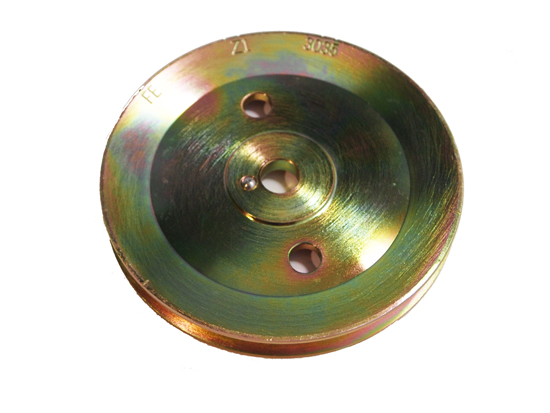
Diagram ref no 11
Related reference numbers
Related, superseded, cross reference or alternative numbers for comparison.
90110214800
The product you are viewing cross references to these numbers
- Porsche 911 1965-1968 2.0L / 912 SWB (F)
- Porsche 911 1968-1973 2.2L / 2.4L / 2.7L RS LWB (F)
- Porsche 911 1974-1977 2.7L / 1976-77 3.0 Carrera
- Porsche 911 1978-1983 3.0L / SC
- Porsche 911 1984-1986 3.2L
- Porsche 911 1987-1989 3.2L G50
- Porsche 911 1975-1977 3.0L Turbo (930)
- Porsche 911 1978-1989 3.3L Turbo (930)
- Porsche 964 (911) C2 1989-93
- Porsche 964 (911) C4 1989-93
- Porsche 964 (911) RS 3.6L 1991-93
- Porsche 964 (911) RS 3.8L 1991-93
- Porsche 964 (911) TURBO 3.3L 1991-93
- Porsche 964 (911) TURBO 3.6L 1991-93
- Porsche 993 (911) C2 1994-97
- Porsche 993 (911) C4 1994-97
- Porsche 993 (911) RS 1994-97
- Porsche 993 (911) C2S 1994-97
- Porsche 993 (911) C4S 1994-97
- Porsche 993 (911) TURBO 1994-96
- Porsche 993 (911) GT2 1994-97
- Porsche 993 (911) TURBO S 1994-97
- Porsche 996 TURBO 2000-05
- Porsche 997 MK1 TURBO 2007-09
- Porsche 997 MKII Turbo 2010-13
- Porsche 356 1950-55
- Porsche 356A 1955-59
- Porsche 356B 1959-63
- Porsche 356C 1963-65
- Porsche 914 (1970-1976)
Shop Securely
12 Month Warranty
Worldwide Delivery

Monday-Friday: 8.30am - 5.30pm (GMT)
Saturday: Closed
Sunday: Closed