



Enter your VAT number here and click Verify:
Your details have been verified. VAT number registered to:
,
.
Your order will now be zero rated for VAT purposes. We reserve the right to verify these details after your order request has been made and reinstate VAT if required.
Your VAT details were not recognised or were invalid. Your VAT number must be matched to your Billing Country as specified above. This is currently specified as . You do not need to enter the country code part of your VAT number as this has already been selected in your billing address details above.
The VAT number checking service is currently offline. Please supply your VAT details within the comments or special instructions field below and we will apply a VAT discount after placing your order request.
Your Porsche
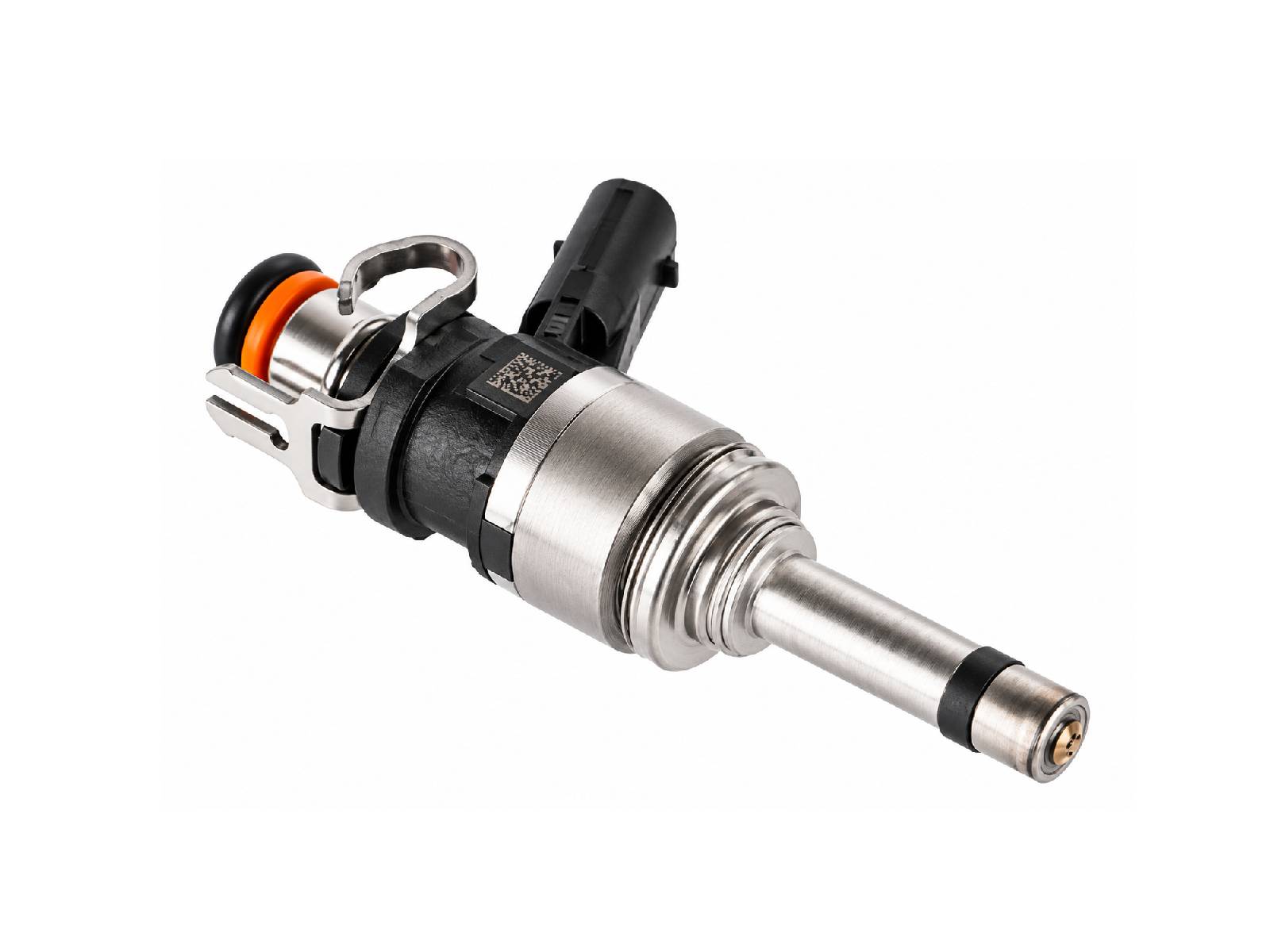
 Porsche

High Pressure Fuel Injector
Sold each - 6 required per car
The injector delivers precisely measured fuel directly into
the combustion chamber under high pressure, ensuring efficient combustion, smooth
engine operation and consistent performance.
Fits:
- Porsche 991.2 Turbo Coupe 3.8L (540 Bhp) 2016-19
- Porsche 991.2 Turbo S Coupe 3.8L (580 Bhp) 2016-19
- Porsche 991.2 Turbo Cabriolet 3.8L (540 Bhp) 2016-19
- Porsche 991.2 Turbo S Cabriolet 3.8L (580 Bhp) 2016-19
- Porsche 991.2 GT2 RS 3.8L PDK (700 bhp) 2018-19
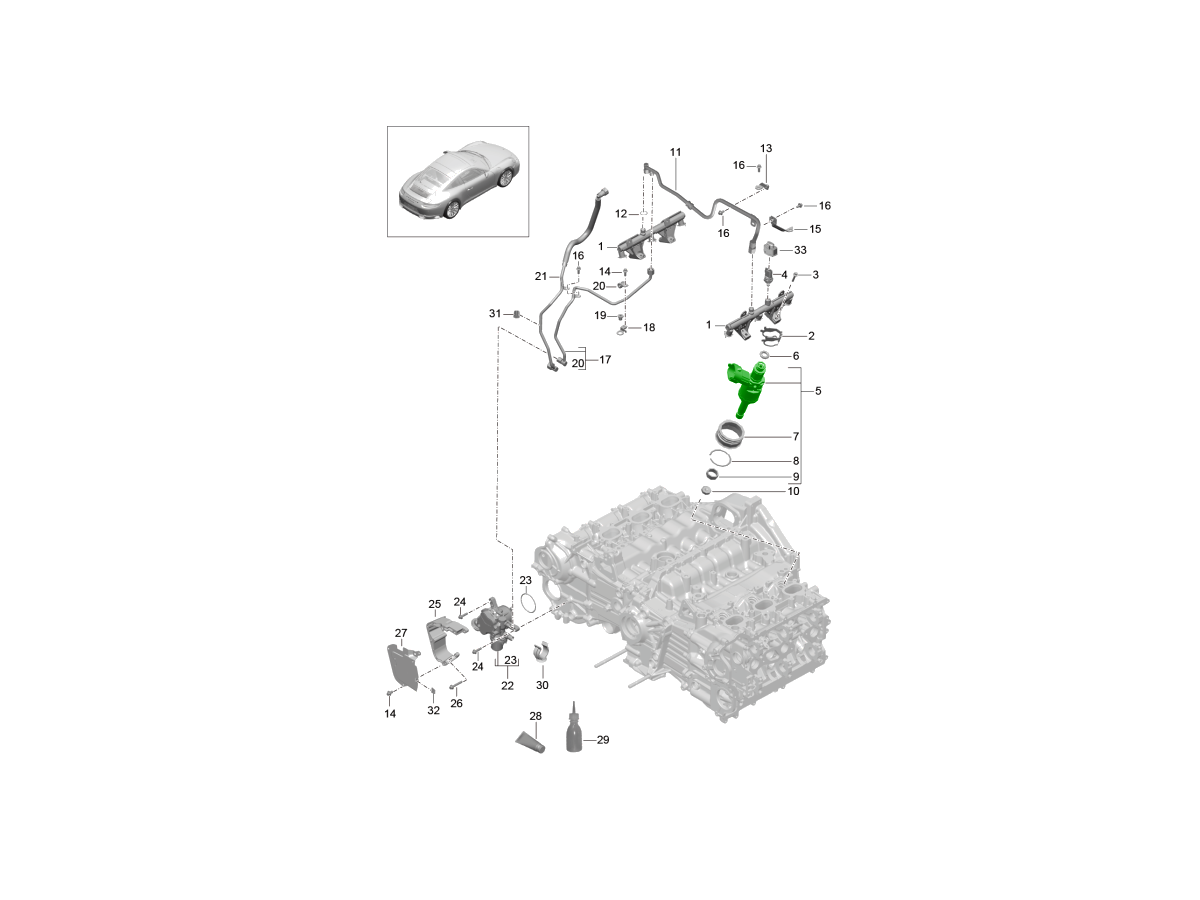
Diagram Ref No 5
Manufactured to Porsche's original specifications, it provides the correct fuel delivery characteristics for these high-performance engines.
What Does the High Pressure Fuel Injector Do?
The injector sprays a precisely controlled quantity of petrol directly into the engine's combustion chamber.
Working with the engine management system and high-pressure fuel pump, it ensures accurate fuel delivery during idling, acceleration and high engine loads.
Correct injector operation is essential for maintaining engine power, fuel efficiency, smooth running and reliable combustion.
Why Do High Pressure Fuel Injectors Fail?
Fuel injectors operate under extreme pressure and
temperature conditions. Over time, they can develop problems caused by:
- Carbon deposits restricting the injector spray nozzle.
- Contaminated fuel or fine particles damaging internal components.
- Wear of internal injector valves and seals.
- Electrical faults affecting injector operation.
- Heat
cycling and prolonged high-performance engine use
A faulty injector can cause uneven fuel delivery, misfires, poor acceleration and increased fuel consumption.
When Should the Injector Be Replaced?
Replacement should be considered when an injector is confirmed faulty, leaking or unable to deliver the correct quantity of fuel.
Common symptoms include:
- Rough idling or engine misfires.
- Hesitation during acceleration.
- Reduced engine performance.
- Increased fuel consumption.
- Engine warning light illumination.
- Fuel mixture or cylinder misfire fault codes.
- Difficult starting or excessive exhaust emissions.
A malfunctioning injector can cause incorrect air-fuel mixtures and potentially damage the engine or catalytic converter if left unresolved.
Checks and Diagnosis
Before replacing an injector, check the engine fault codes, fuel rail pressure and individual cylinder misfire data.
Inspect the fuel supply system and injector electrical connections. Where necessary, carry out injector performance and leakage testing to confirm the fault.
High-pressure fuel systems require specialist depressurisation and installation procedures. Replace associated seals and mounting components as specified by Porsche.
Key Features
- Provides precise high-pressure fuel delivery.
- Supports accurate combustion and engine performance.
- Helps restore smooth idling and acceleration.
- Manufactured to original Porsche specifications.
- Six injectors required for a complete engine set.
Product Category Description – Porsche 991.2 Turbo & GT2 RS Fuel Injectors
High-pressure fuel injectors are essential components of the Porsche 991.2 Turbo, Turbo S and GT2 RS direct fuel injection systems. They deliver precisely controlled fuel quantities into each cylinder, ensuring efficient combustion and consistent engine performance.
Faulty or contaminated injectors can cause misfires, poor throttle response, increased fuel consumption and reduced engine power.
Replacing a defective injector helps restore accurate fuel delivery, reliable combustion and the performance expected from Porsche's turbocharged engines.
Related reference numbers
Related, superseded, cross reference or alternative numbers for comparison.
9A111022231
The product you are viewing cross references to these numbers
- Porsche 991.2 Turbo Coupe 3.8L (540 Bhp) 2016-19
- Porsche 991.2 Turbo S Coupe 3.8L (580 Bhp) 2016-19
- Porsche 991.2 Turbo Cabriolet 3.8L (540 Bhp) 2016-19
- Porsche 991.2 Turbo S Cabriolet 3.8L (580 Bhp) 2016-19
- Porsche 991.2 GT2 RS 3.8L PDK (700 bhp) 2018-19

 Shop Securely
 12 Month Warranty
 Worldwide Delivery
 Free delivery


Monday-Friday: 8.30am - 5.30pm (GMT)
Saturday: Closed
Sunday: Closed